Coastal Life Shaped Youshen
Coastal Fujian has long faced the sea. Fishing, shipping, migration, and trade shaped local belief systems around weather, tides, illness, and journeys. Deities were not only temple figures; they were understood as public protectors of lanes, boats, households, and lineages.
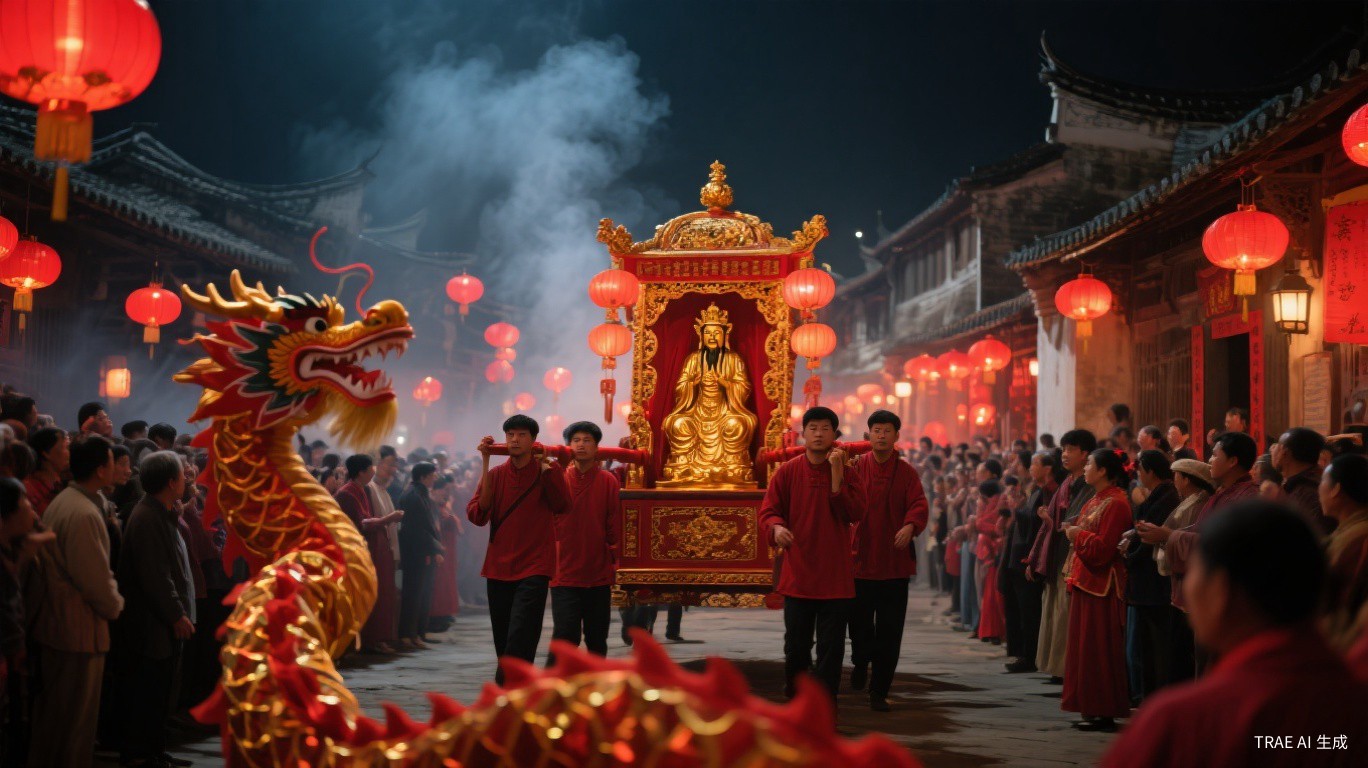
The central movement of Youshen is inviting the deity out of the temple. Once the statue enters village roads, ancestral halls, docks, and household doorways, belief expands from a fixed sacred space into the whole community.
Spring Festival Resets Time
Youshen often takes place in the first lunar month because Spring Festival marks a restart of time. The community confirms a new order through welcoming, procession, and farewell.
For many people who live away from home, Youshen is tied to returning. Family gatherings, village streets, and the shared sight of the procession reconnect personal memory to ancestral space.
Houfu, Changle Offers a Contemporary Case
Recent reporting makes Changle, Fuzhou a clear contemporary window onto Youshen. In Houfu Village, reports describe more than 300 deities leaving the temple on the tenth day of the first lunar month, moving through streets as households welcome the procession. The same reporting notes a history of more than 400 years. People's Daily Online also describes a Changle procession crossing 18 villages from morning into the next day.
These numbers are not only spectacle. They show how Youshen runs through village organization, lineage networks, returning residents, and young volunteers. The ritual remains solemn while also moving through social media, tourism, and overseas-homecoming circuits.
Tradition Travels With Migration
As Fujianese communities migrated to Taiwan, Southeast Asia, and beyond, they carried temple networks, deities, and festival organization with them. The forms changed, but the core remained: invite the deity, circulate through the community, and renew shared memory.
This is why the project speaks to overseas Chinese and international readers. Youshen is a local tradition, but it is also a lens for migration, identity, and cultural transmission.